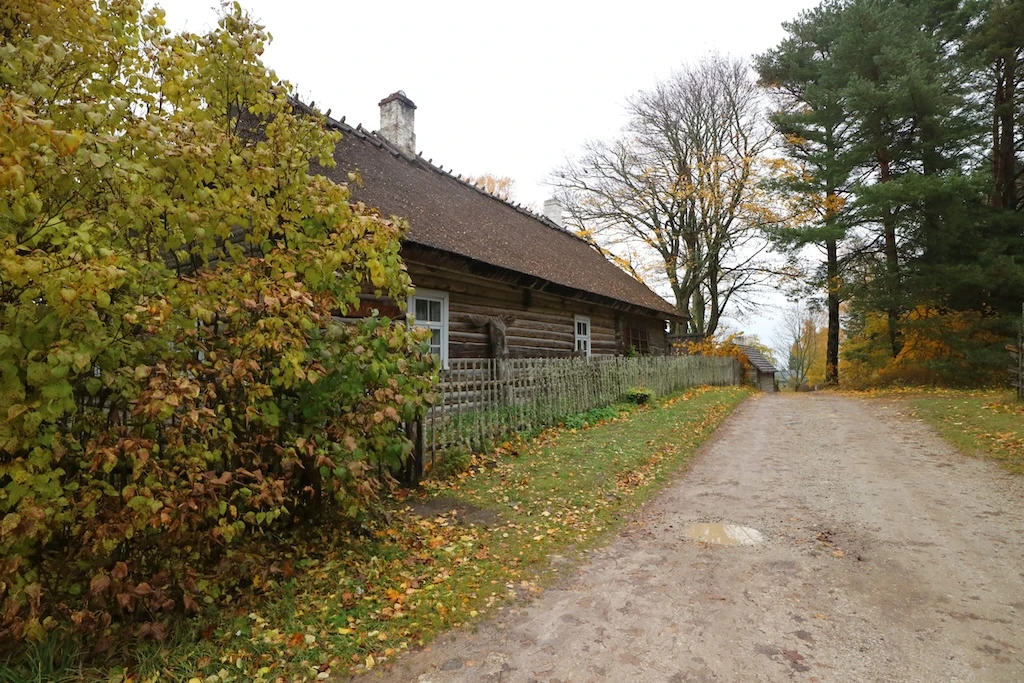
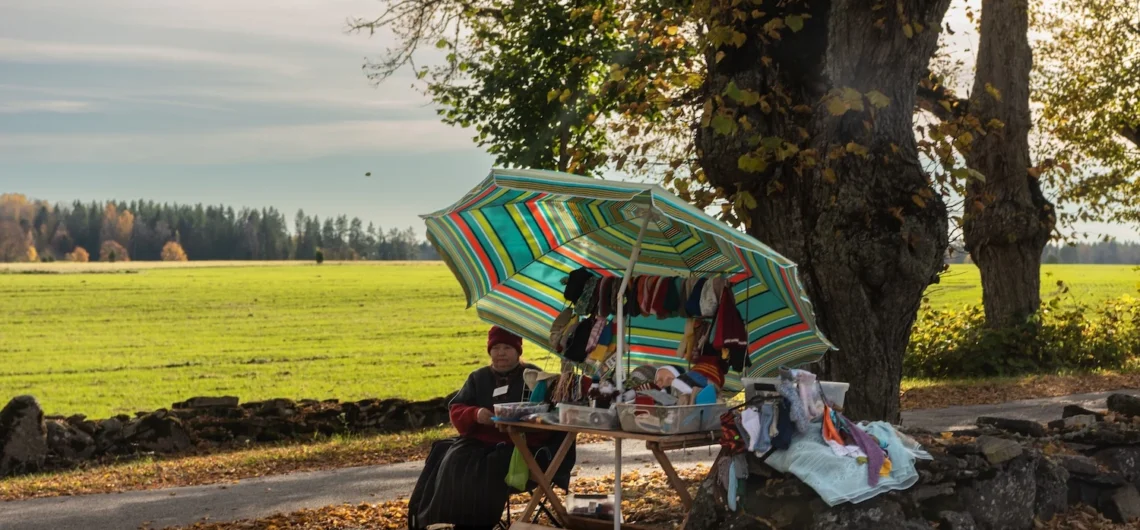
In autumn Estonia slows down. The summer visitors have gone home, the forests turn red and gold over a few short weeks, and the mushroom season fills the woods with people carrying baskets. It is a slower, darker, and more colourful time of year, and in many ways the most Estonian one. From September to November, here are eight ways to spend a day out of Tallinn.
1. See the autumn colours in Lahemaa National Park
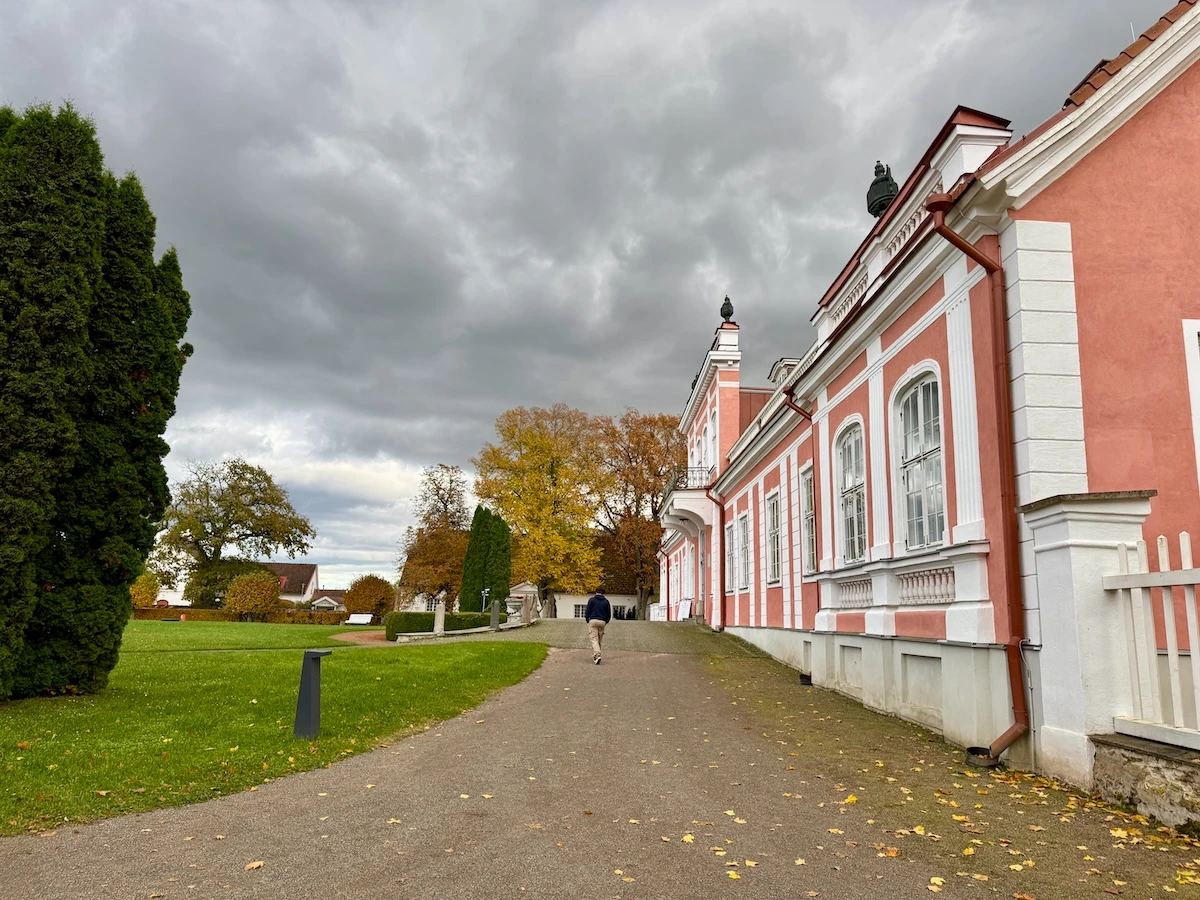
Lahemaa is the largest national park in Estonia, a mix of forest, bog, coastline, and old manor estates about an hour east of Tallinn. In autumn the birch and aspen turn yellow, the bog shrubs go deep red, and the manor parks at Palmse and Sagadi are quiet enough to walk through almost alone. The coast here is rocky and open, with huge erratic boulders left behind by the ice age scattered along the shore. A full day takes in the forest trails, the coastline, and one or two of the old fishing villages. This is the route the Day Trip to Lahemaa National Park follows.
2. Walk a bog when it turns red and gold
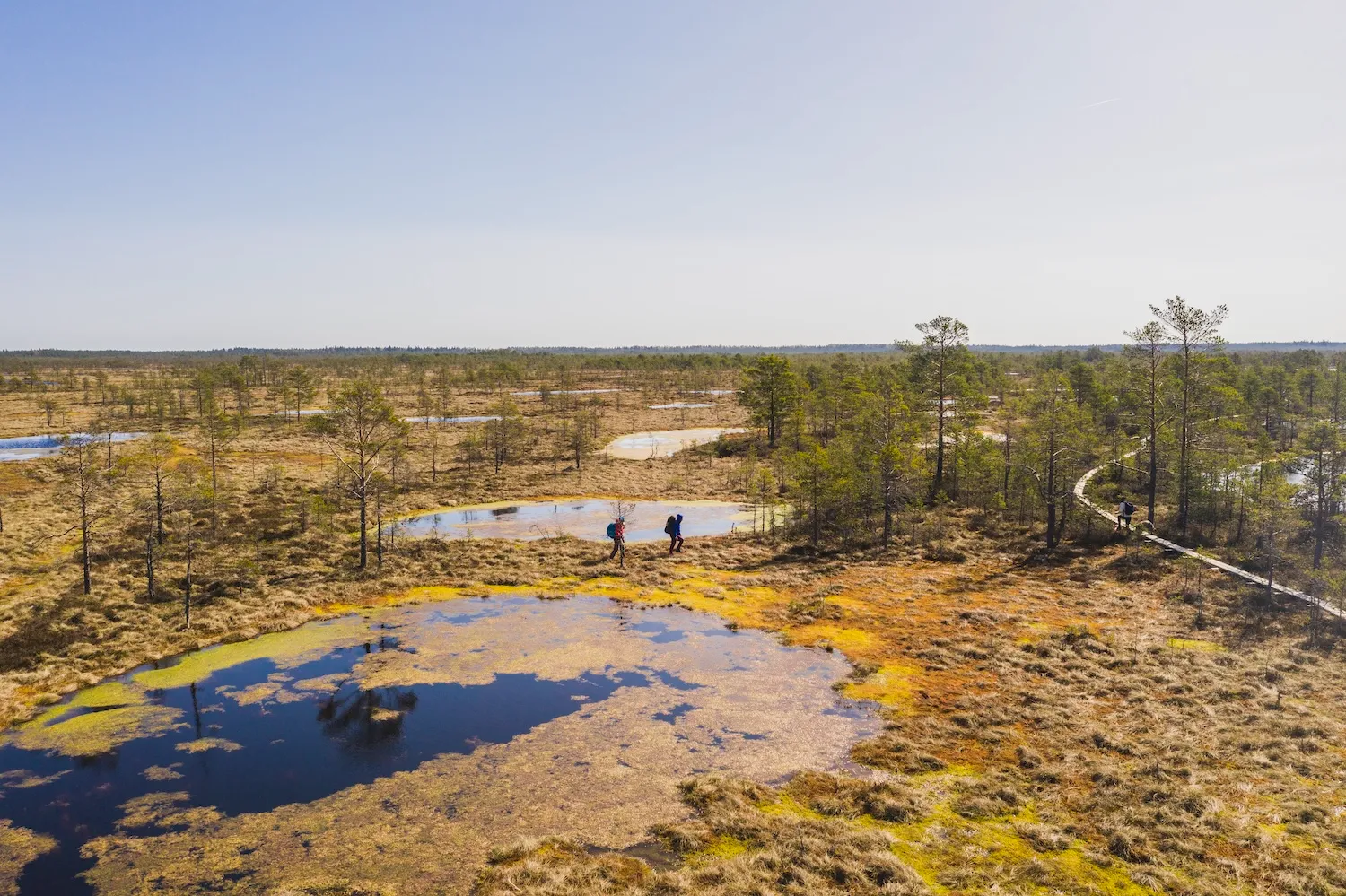
Bogs are one of Estonia’s strangest and most typical landscapes: waterlogged ground built up over thousands of years, dotted with dark pools and low, ancient pines. In autumn the sphagnum moss turns rust-red, and the cranberries ripen right on the surface, so you can pick a few as you go. Because the ground is soft, you cross it in bog shoes, wide-framed shoes that spread your weight and stop you from sinking in. It is easier than it sounds and works for most fitness levels. The Bog Shoe Hiking tour takes you out onto the bog itself, and if the whole idea is new to you, our short guide to what a bog is explains how they form.
3. See Jägala, the widest waterfall in Estonia
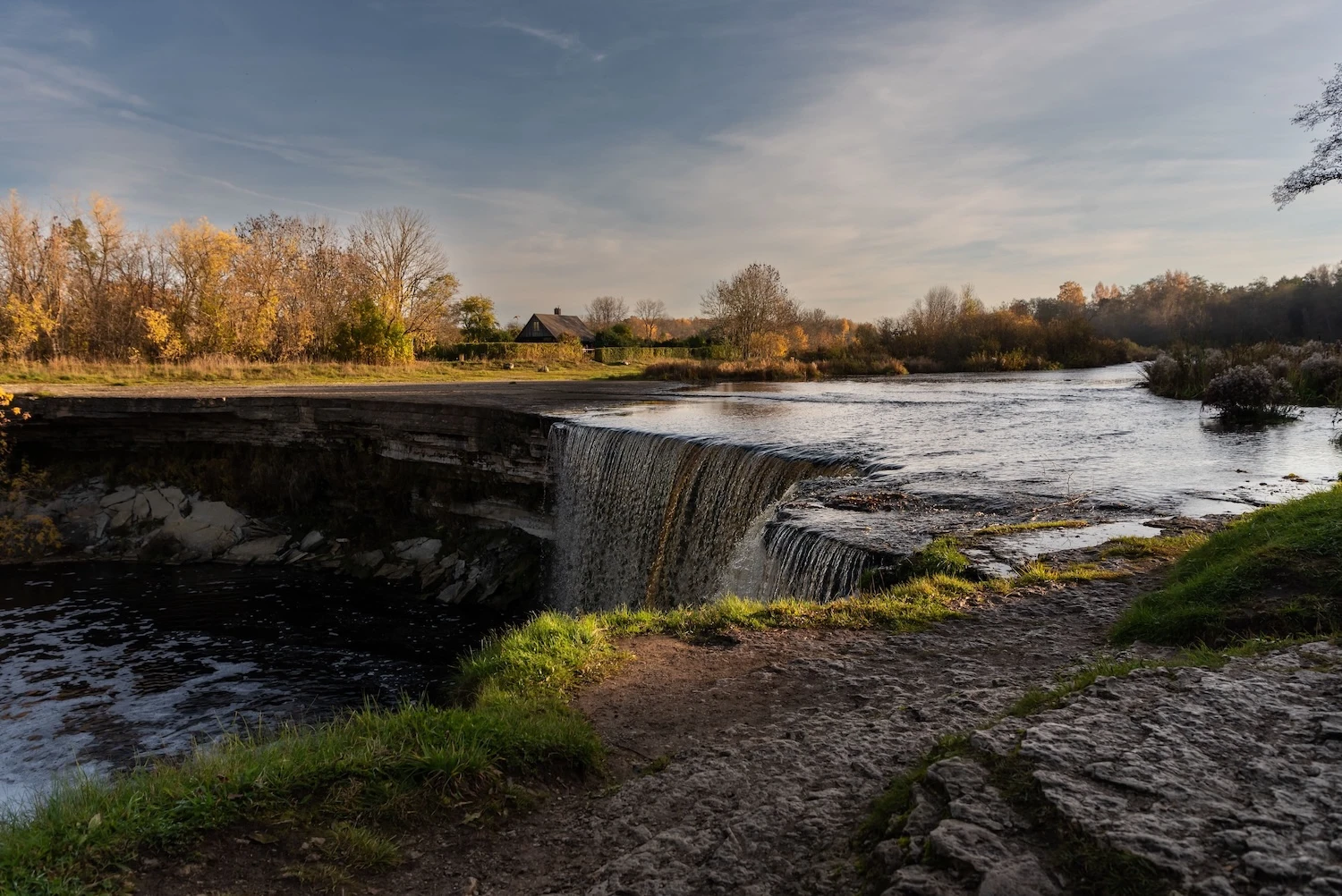
Jägala is the widest natural waterfall in Estonia, around eight metres high and more than fifty metres wide, curving across the river in a broad arc. How much water comes over depends on the season and the rain, and autumn, after a wet spell, is one of the better times to catch it running full – though even at a calmer flow it is a striking place to stand.
Later in the season, as temperatures drop, the edges begin to freeze. Jägala also combines well with other stops, and therefore we have different tours that visit the waterfall:
- with the countryside and coastal history around it on the Jägala Waterfall and Historic Harju County tour,
- paired with a boardwalk across a bog on the Jägala Waterfall and Bog Walk from Tallinn,
- added to a morning in the capital on the Tallinn Old Town and Jägala Waterfall tour
- shorter tour, where you can enjoy a picnic by the waterfall – Jägala Waterfall and Picnic Tour
- it is also included in the Day Trip to Lahemaa National Park
4. Stay a night in the forest
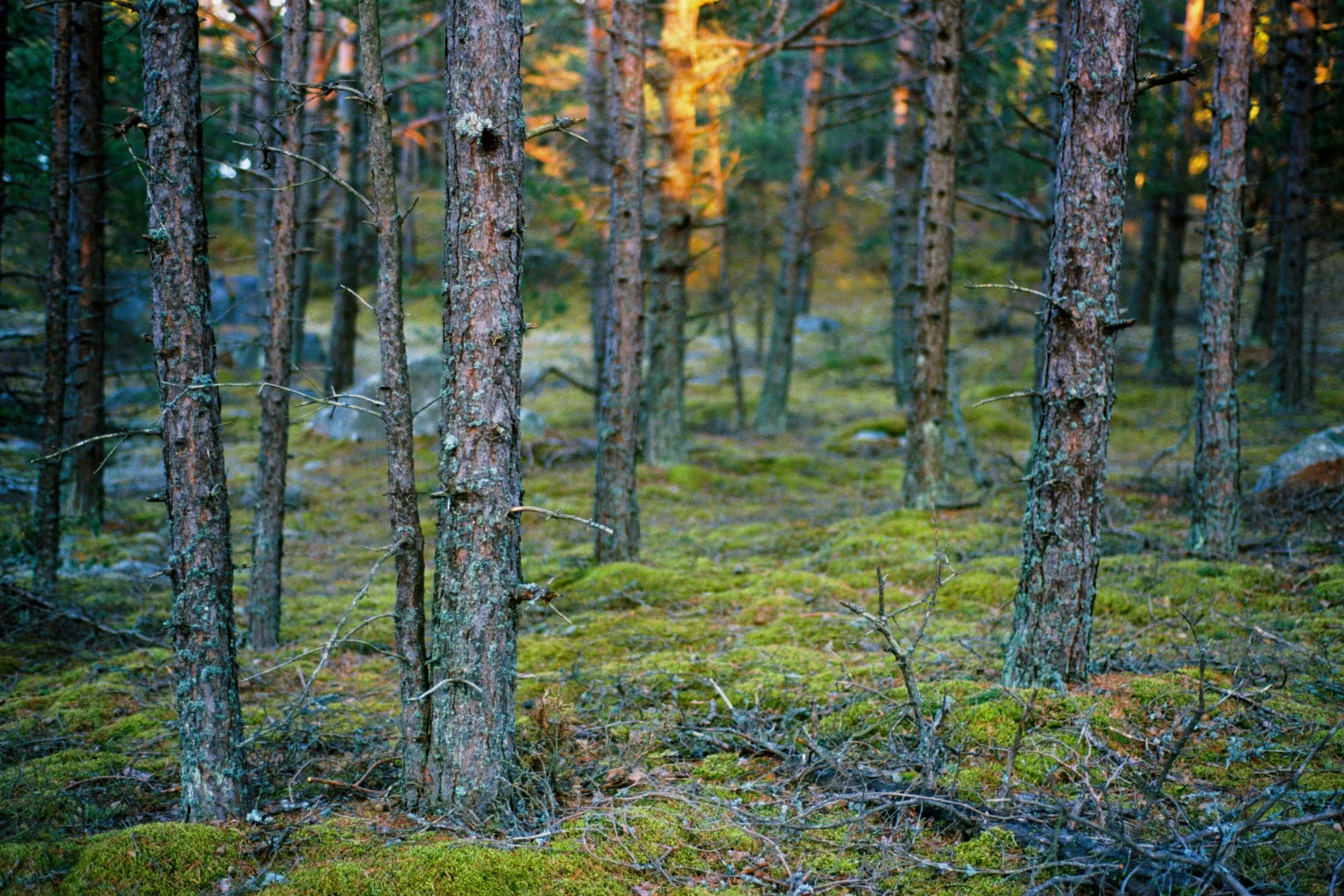
Autumn is a good season to slow right down and stay out overnight, when the forests are quiet and the evenings turn cool enough to make a sauna and a warm farmhouse feel earned. The Overnight Nature Experience in Kõrvemaa does exactly that: a night in a country farmhouse in the protected Kõrvemaa forest, a traditional sauna, a homemade breakfast, and one guided outdoor activity chosen to suit the season, from a bog hike to a foraging walk. The programme is put together for each group, so it flexes around the weather and what you feel like doing.
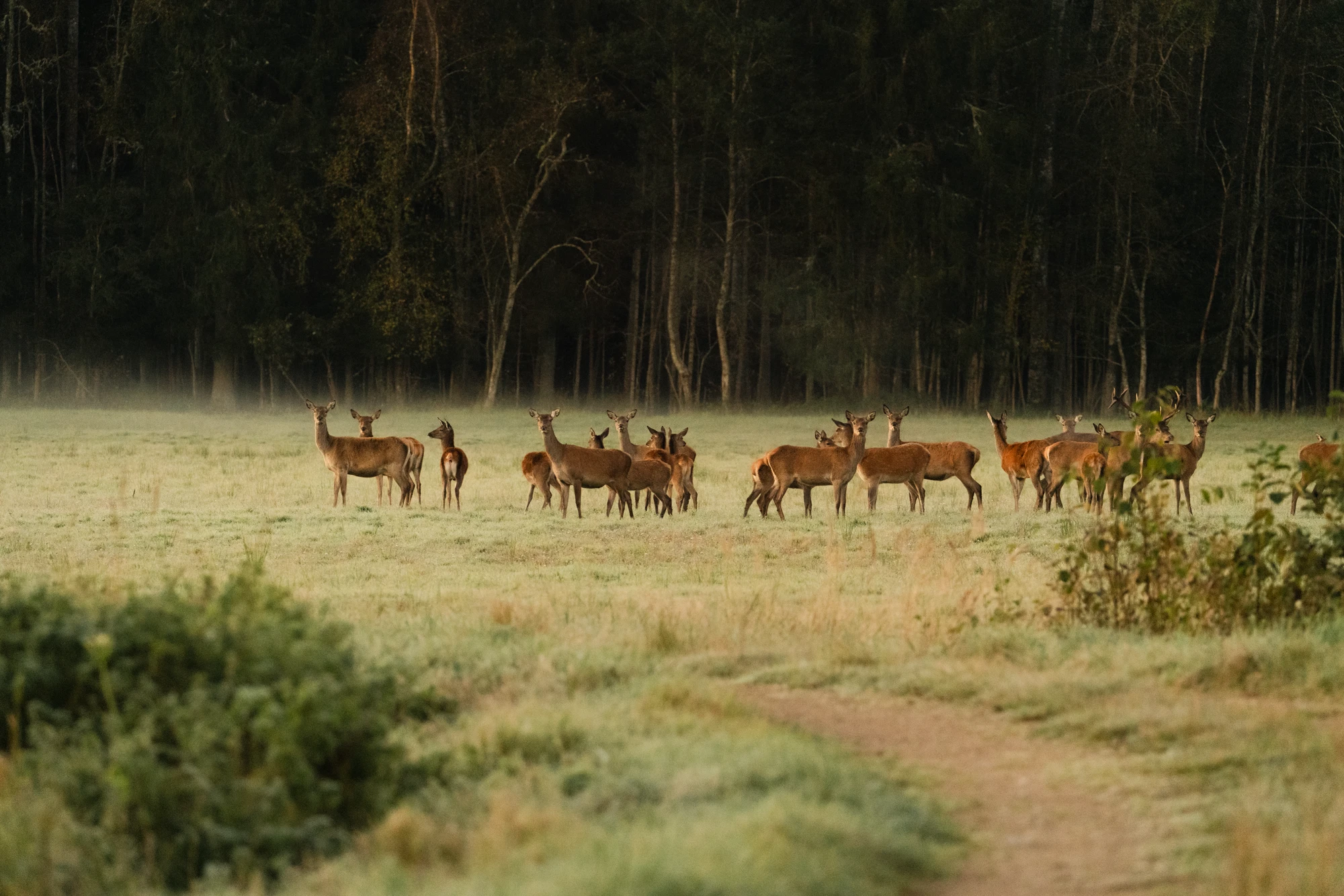
September also brings the deer rut, when the animals grow far more active and vocal. Staying overnight puts you out in the forest when they are moving at dawn and dusk, away from light and noise, under a properly dark sky. The nights are drawing in but not yet freezing, so it is a comfortable time to be out. The Overnight Experience at Toosikannu Nature Resort pairs a night in the forest with a deer safari.
5. Warm up in a sauna as the weather cools
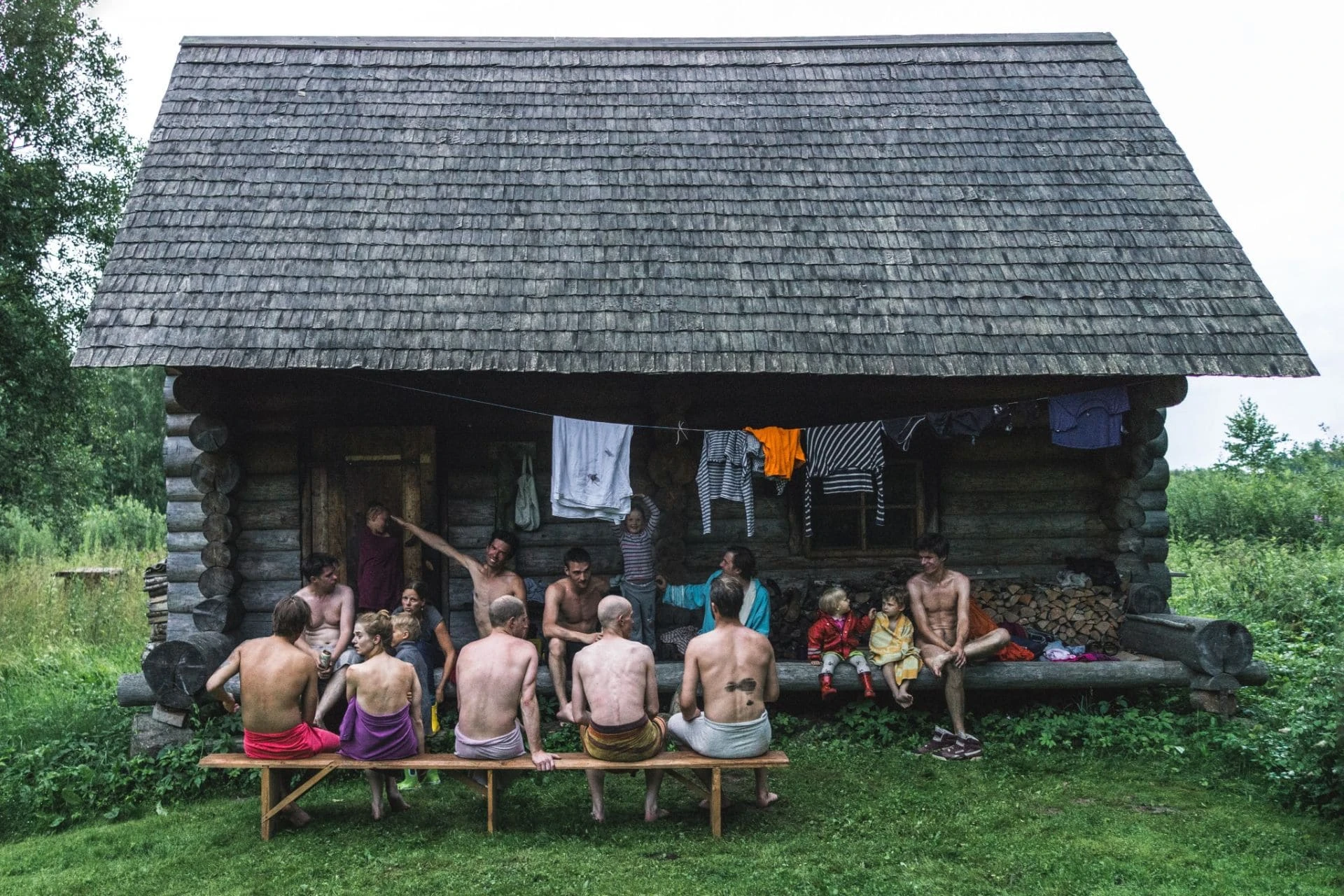
The sauna sits at the centre of Estonian life, more so as the weather turns. A proper one is wood-heated, hot enough to make you gasp. Autumn is its natural season: you spend the day outdoors in the cold and the damp, then warm through slowly in the heat. It is as much a social ritual as a way to get clean, and a good introduction to how Estonians actually live. Estonia’s Bogs and Sauna Tour combines the two: a walk across the bog, followed by time in the sauna.
6. Visit Prangli island before winter
The small islands off the north coast are at their quietest in autumn, once the summer boats stop running daily. Prangli is the most interesting of them: an island with a year-round population of a few dozen, its own shop and church, and a way of life that slows right down as the season ends.
You reach it by a short ferry ride, and once there the pace is set by the sea and the weather rather than a timetable. It is a good place to understand how island communities carry on through the Estonian winter. The Prangli Island day trip includes the sea crossing and an island tour through local villages, forests, and the coastline.
For a slower, more active day, the Hiking and Sauna Tour on Prangli Island swaps some of the sightseeing for time on the trails and a wood-heated sauna by the sea.
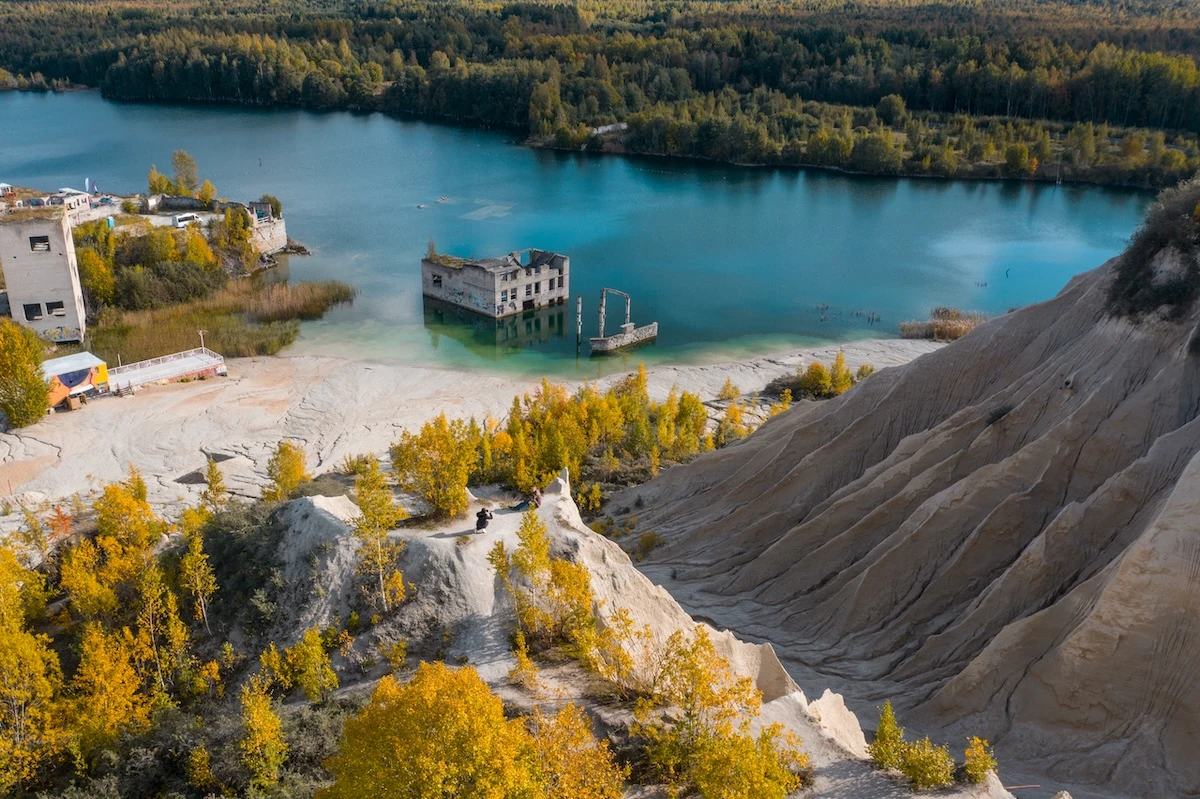
7. See Rummu quarry and the coastal cliffs in autumn light
Rummu is a former limestone quarry, worked by prison labour in the Soviet era and later flooded when the pumps were switched off. What is left is a lake of clear turquoise water with the ruins of prison buildings and machinery still standing around and beneath the surface, an odd and slightly eerie place that looks striking under the low autumn sun.
Nearby, the Baltic limestone cliffs, the North Estonian klint, run along the coast, marking the edge of an ancient seabed. The Rummu Quarry and Coastal Cliffs day tour takes in both, with the site’s history along the way.
8. Explore Tallinn’s Old Town without the summer crowds
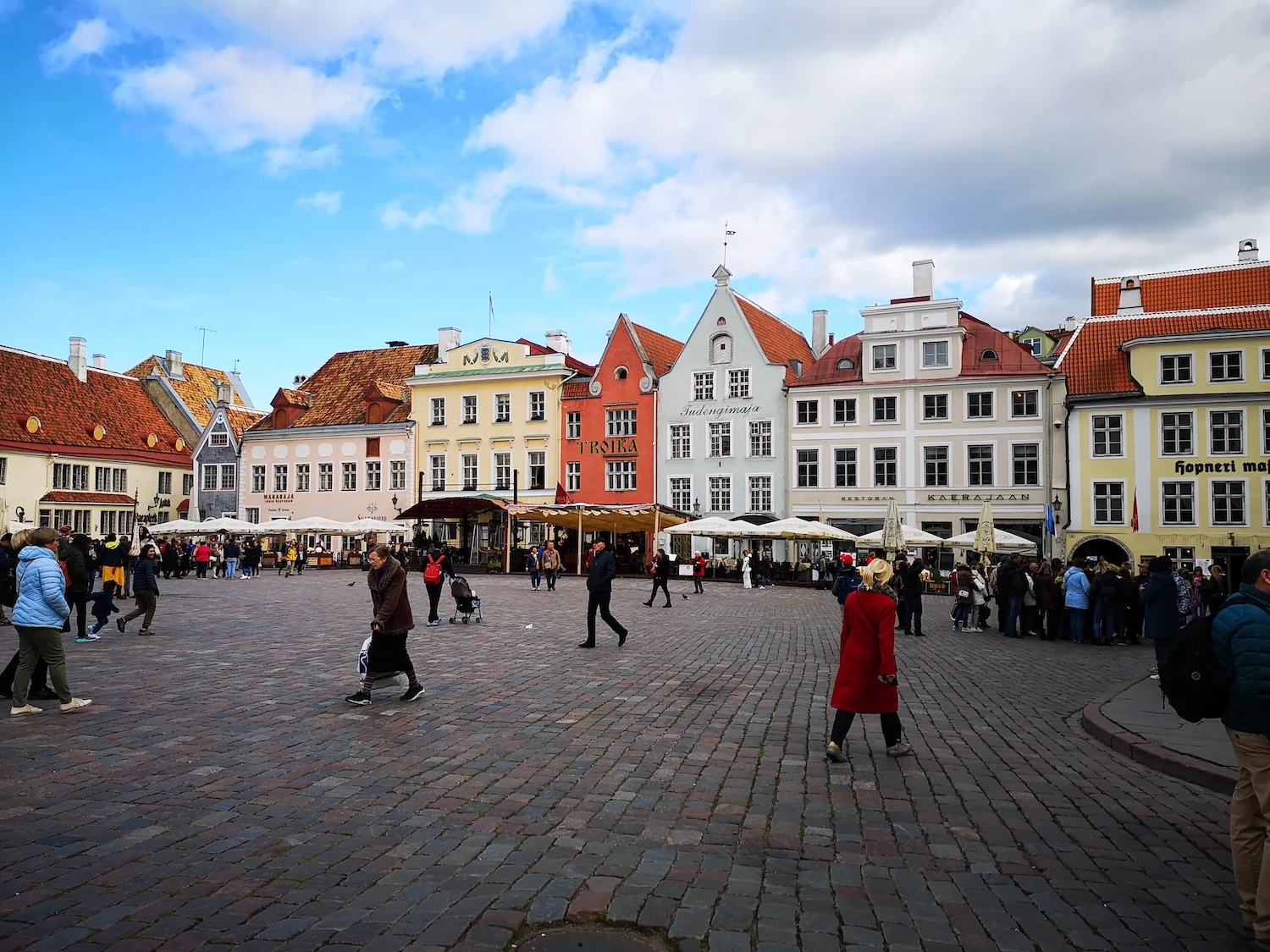
Tallinn’s Old Town is one of the best-preserved medieval centres in Europe, and in autumn it becomes properly walkable again once the cruise ships thin out. The cobbled lanes, merchant houses, and town wall are unchanged, but you can stop in the middle of a street without being in anyone’s way, and the cafes turn into warm places to sit as it gets dark early. The light is lower and softer, which is good for photographs. A Tallinn Old Town walking tour with a local guide puts the buildings into context – the guilds, the Hanseatic trade, the sieges – rather than leaving them as a pretty backdrop.
When to visit and what to pack
Autumn in Estonia runs roughly from September to November. Early autumn is mild and has the best colours, while November turns darker and colder as winter approaches. The days get noticeably shorter, so it is worth planning outdoor trips for midday. Bring waterproof shoes and a windproof layer, because it can be wet and breezy, especially on the coast and the islands. For a fuller picture, see our post on weather in Estonia.
Autumn in Estonia is an easy season to love: fewer people and nature that changes week by week. Whichever day trip you choose, you will see a quieter and more colourful side of the country. Come and see it for yourself before the first snow arrives.