Wetlands cover around 22% of Estonia’s surface, with 6% classified as bogs. Globally, only Finland has a higher percentage of wetlands than Estonia, and Estonians are genuinely proud of this fact. Walking in bogs, picking berries, and spending quiet time in nature are among the most beloved outdoor activities here.
Still, one question comes up again and again on our nature tours: what exactly is a bog?
Let’s clear this up once and for all.
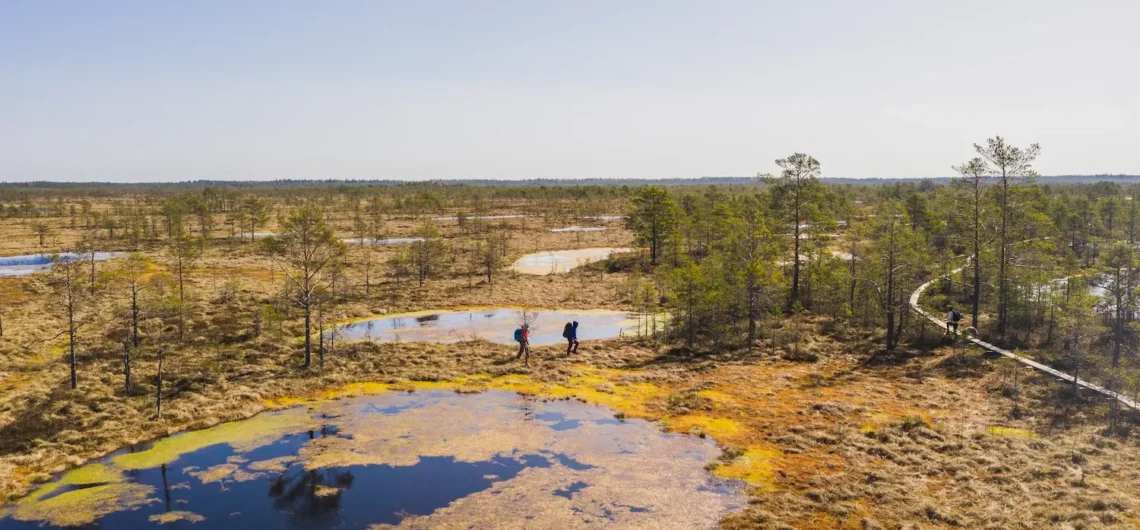
In Estonia, many bogs can be explored via wooden boardwalks, making them accessible and safe even for first-time visitors. In addition, viewing towers allow you to admire the vast bog landscapes and photograph the iconic dark pools reflecting the sky. You can experience this on a Day Trip to Lahemaa National Park or, if you’re short on time, on the Old Town and Bog Walk Tour or Jägala Waterfall and Bog Walk Tour.
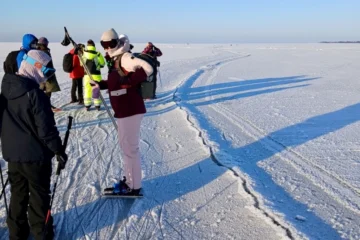
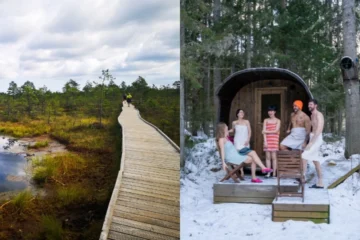
However, if you truly want to go off the beaten path, the Bog-Shoe Hiking Tour offers a much deeper experience, as your guide leads you across the soft ground itself. And to complete the day in true Estonian style, you can relax afterwards on Estonia’s Bogs and Sauna Tour.
Before you head out, here are four clear signs that you have found yourself in a North Estonian bog.
Cover photo by ©Simon Snopek
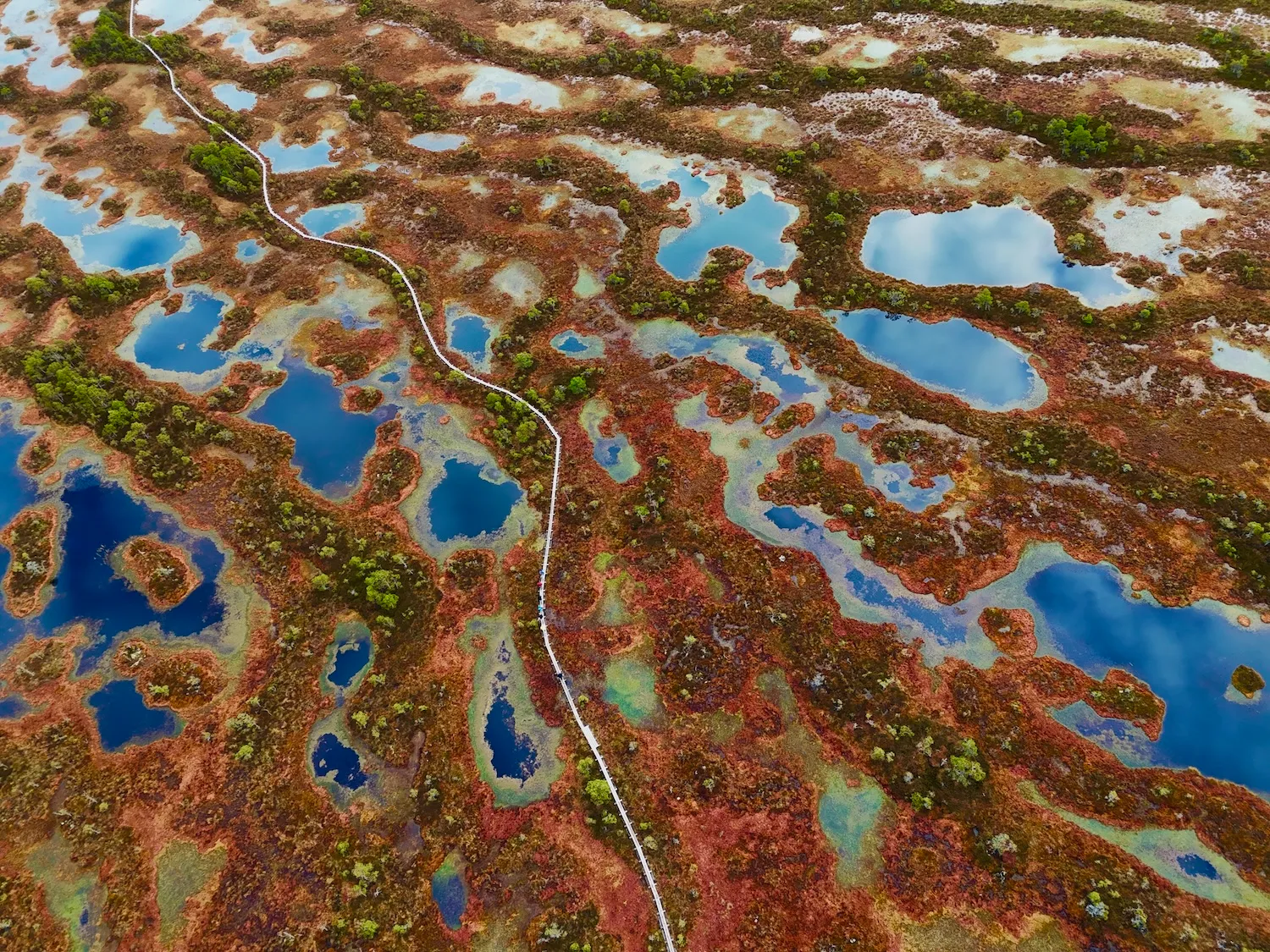
1. A few essential things to know about bog walking
There is an old Estonian riddle: “There’s water, but no ship can sail there. There’s land, but no house can be built there. What is it?”The answer is simple: a bog.
A bog is a wetland that originally started as a lake. Over thousands of years, plants slowly grew and accumulated. Because they lacked oxygen and time to fully decompose, the plant matter piled up into what we now call peat. As a result, a bog is neither fully land nor fully water — it is a spongy mixture of both.
Walking on peat feels soft and bouncy, almost like stepping on a soaked mattress. While it is possible to walk through a bog, there is always a risk of sinking knee-deep. This is exactly why bog shoes exist — wide, ski-like footwear that spreads your weight and makes movement much easier.
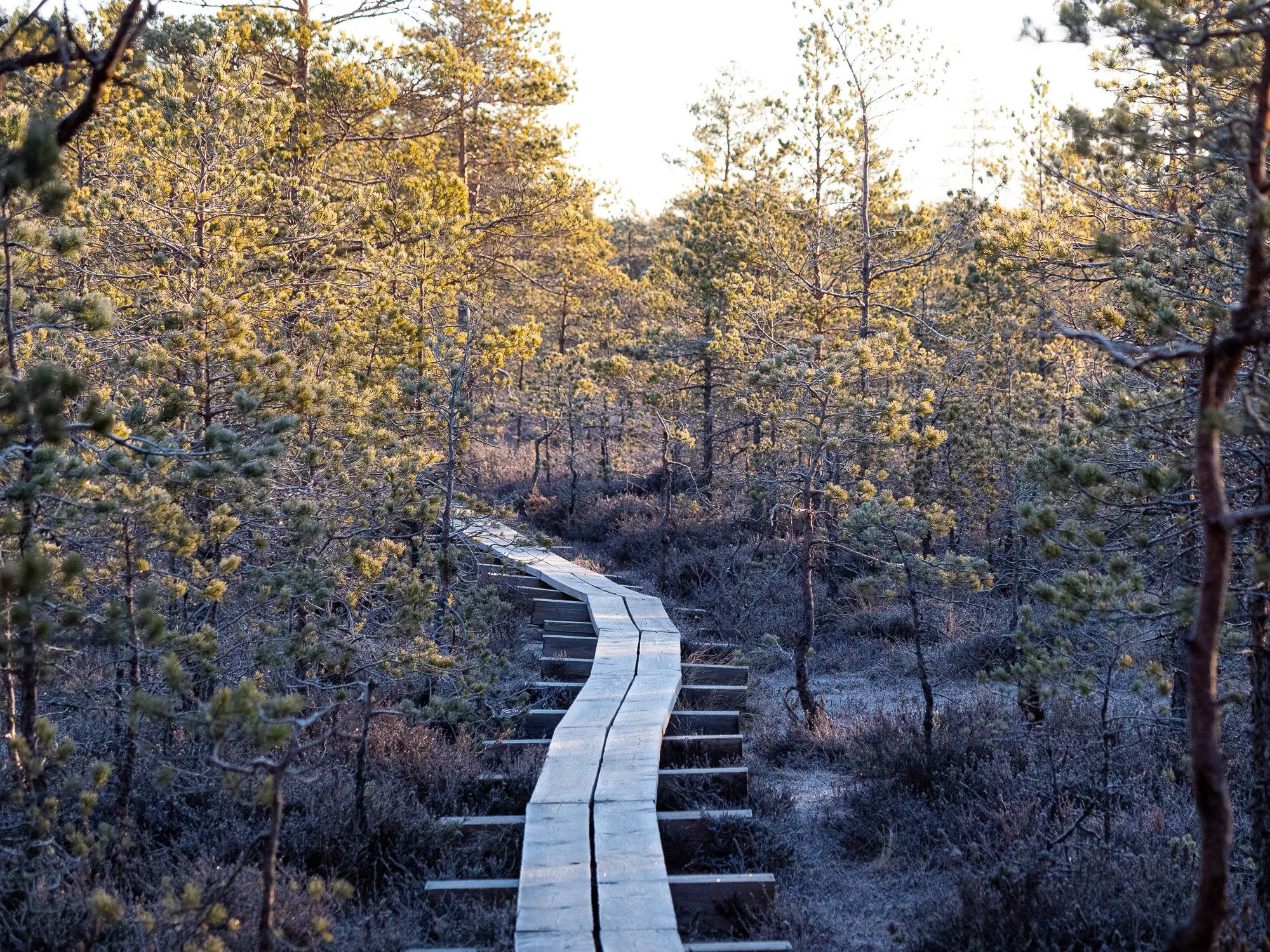
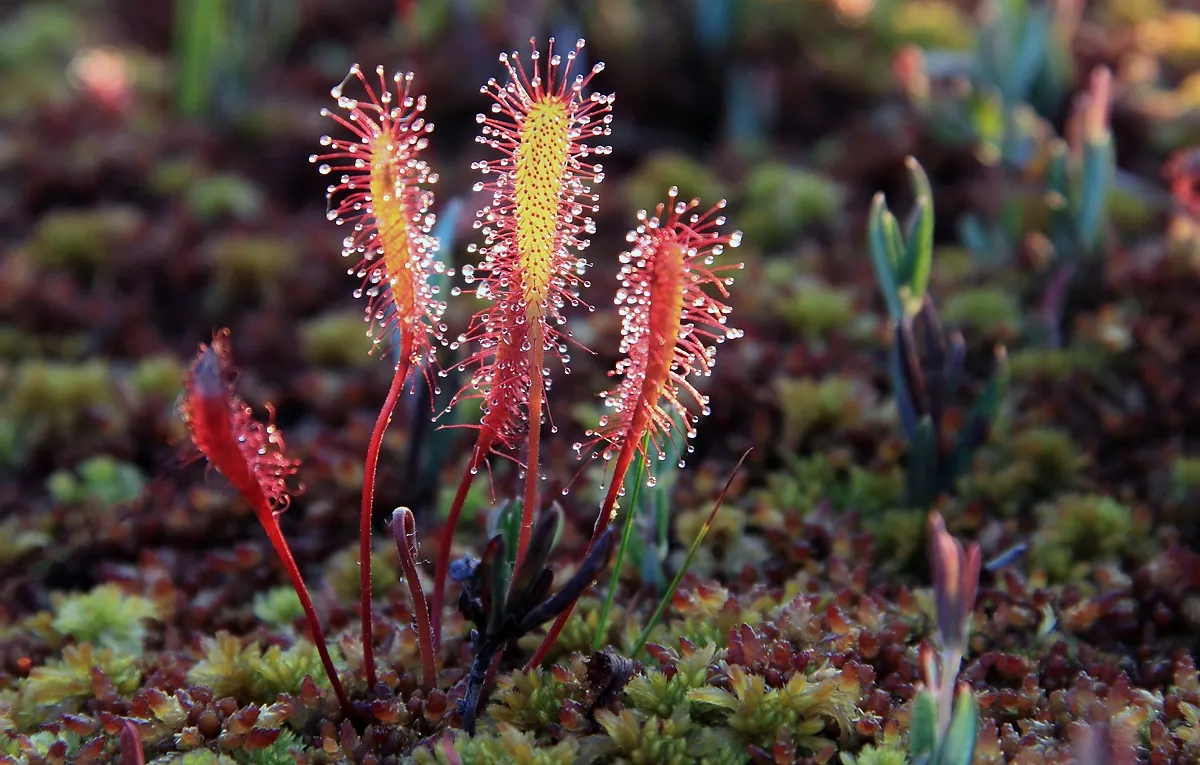
2. Bog plants look unusual — and for a good reason
Unlike forests or meadows, bog plants receive almost all their nutrients from rain and snow. Since nutrients are scarce, plants must adapt in clever ways to survive. As Estonians say, they need to be “as clever as a fox”.
One fascinating example is the sundew, Estonia’s only carnivorous plant, which grows in bogs. Meanwhile, the knee-high pine trees typical of bogs can be older than 15-metre-tall forest pines. Peat moss, which covers nearly 90% of bog surfaces, can hold up to 20 times its own weight in water.
In short, bog plants are masters of adaptation. If you want to learn more, book a Day Trip to Lahemaa National Park and let your nature guide explain the remarkable plant life of Viru Bog in more detail.
3. Dark, mysterious pools that look endless
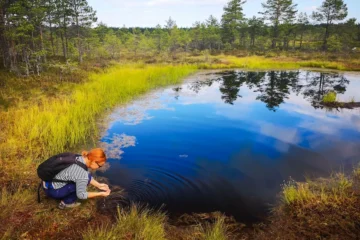
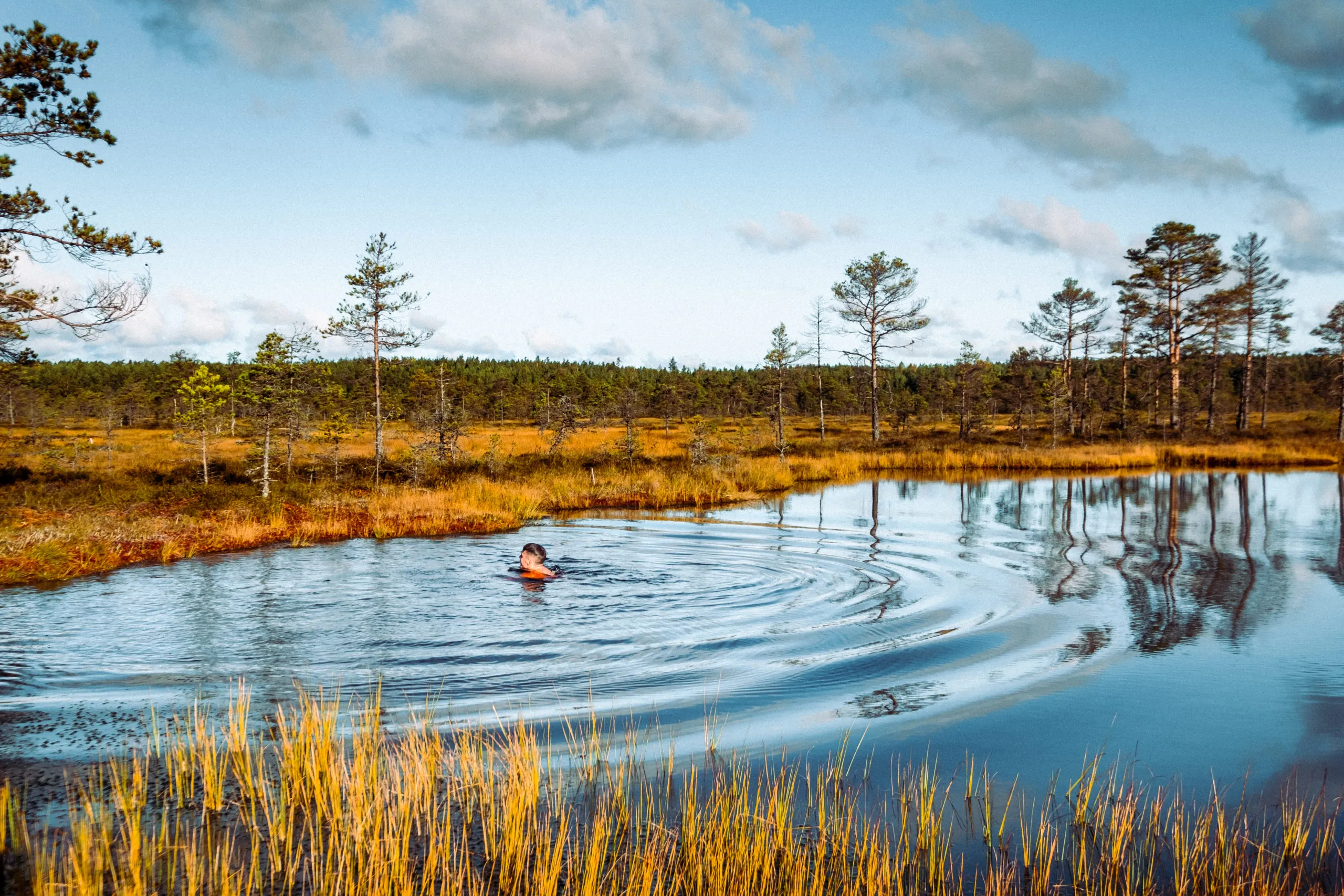
Bogs accumulate a tremendous amount of water that eventually turns into bog pools. The water in the bog pools looks really, really dark and brown. No, it’s not highly polluted, nor is it a gate to the deep abyss of never-ending torture in hell – it’s just organic matter. Despite the feeling that the bog monster can grab a hold of your leg and engage you in a fight for your life, the crazy Estonians still go for relaxing swims in the bog pools… (I assure you, there are no bog monsters). Try out swimming in bog pools during this Estonian Bogs and Sauna Tour so that you can later spend two hours to relax and warm up in typical Estonian sauna. You can read more about Estonian sauna culture here.
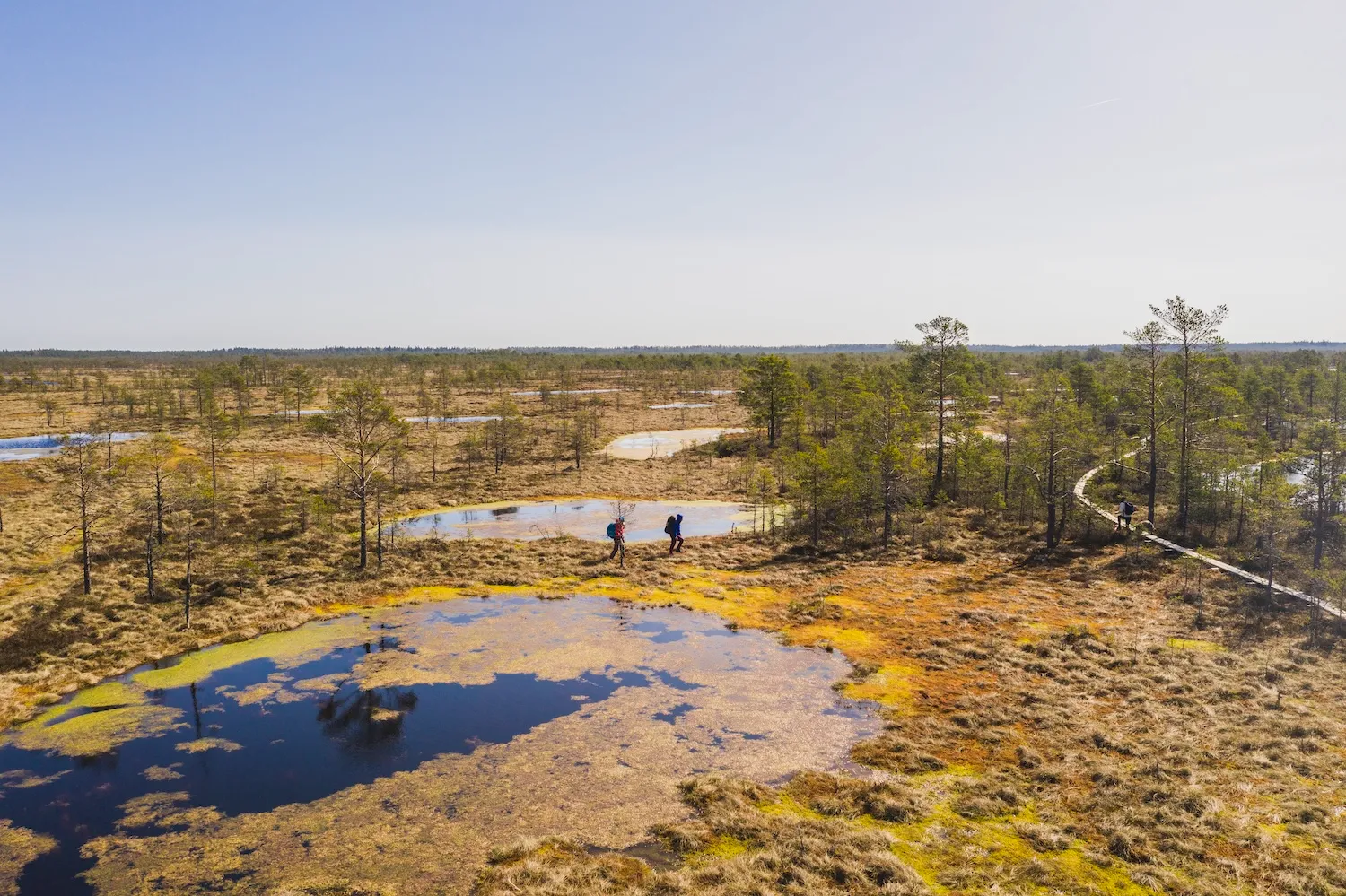
Bogs store enormous amounts of water, which eventually forms bog pools. These pools often look dark brown, even black — but don’t worry. The colour comes from organic matter, not pollution.
Although they may appear deep and frightening, these pools are usually shallow. Still, they have inspired plenty of dramatic imagination. Despite this, many Estonians happily go for refreshing swims in bog pools — yes, really.
If you’re curious enough to try it yourself, the Estonian Bogs and Sauna Tour combines a bog walk with swimming in a bog pool, followed by several hours of warming up in a traditional sauna. You can read more about this tradition in our guide to Estonian sauna culture.
And just to reassure you once more: there are no bog monsters.
4. Mummies, spirits… and maybe even aliens?
Encountering a bog mummy behind every shrub is unlikely — but not impossible. Due to the low oxygen and acidic peat, bogs can preserve human remains exceptionally well. Archaeologists have discovered bodies hundreds or even thousands of years old, often in remarkably good condition.
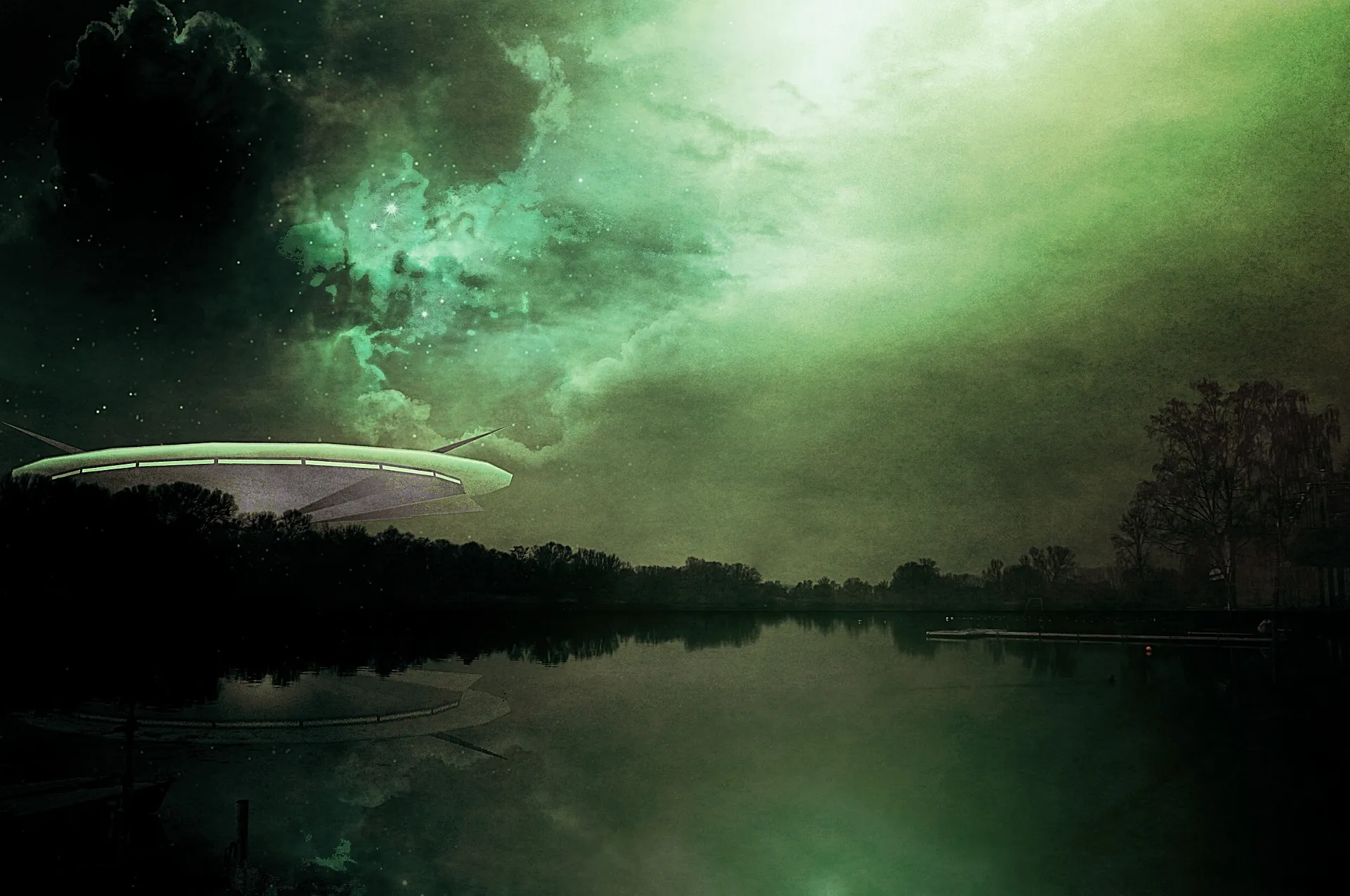
Beyond archaeology, bogs also play a major role in Estonian folklore. Stories speak of guardian spirits of wetlands, will-o’-the-wisps, and mysterious lights. One such place is Kaiu Bog, where locals have reported strange glowing or flying objects and claim that time behaves differently there.
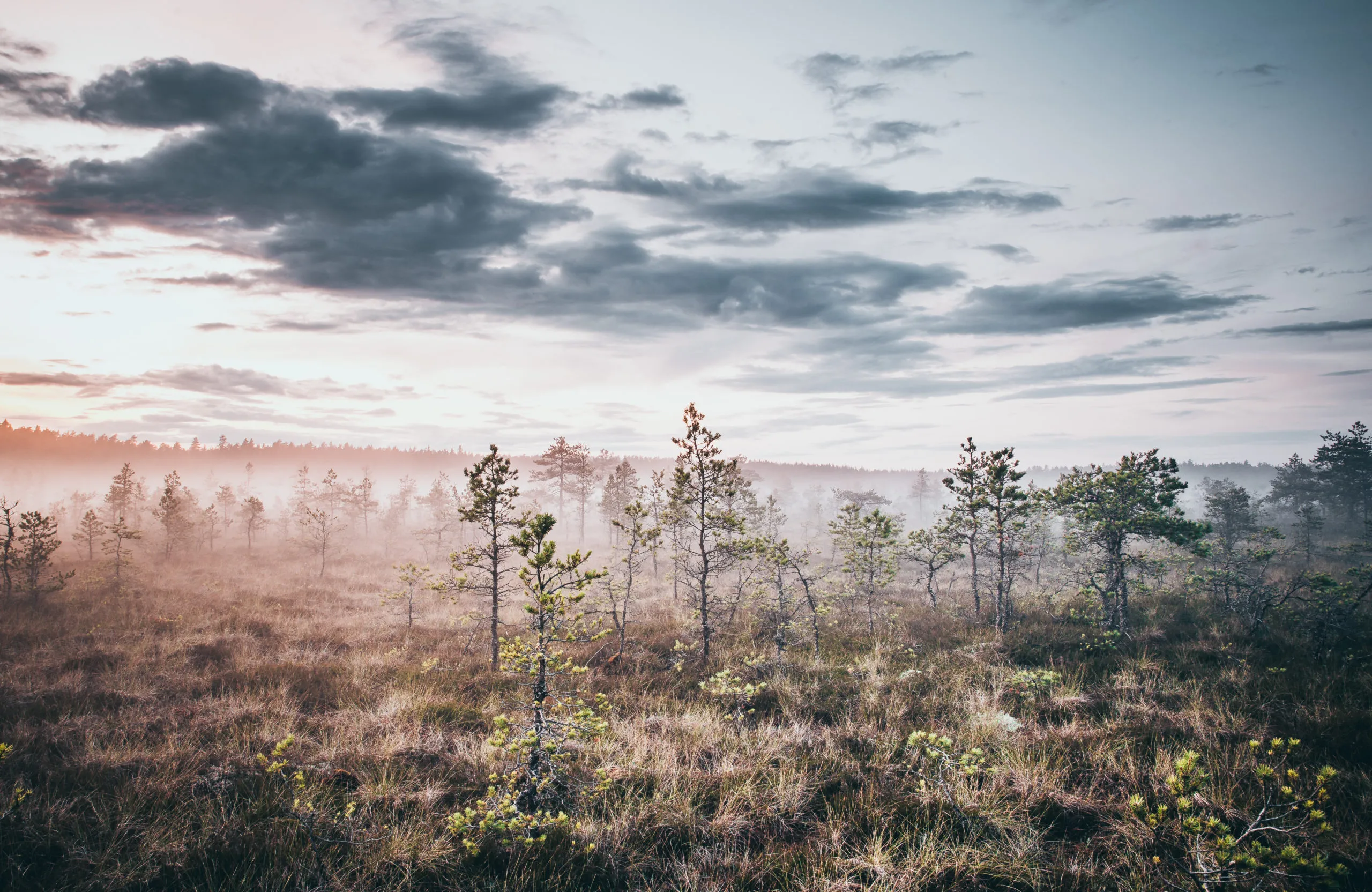
Interestingly, Kaiu Bog is also known for unusual natural phenomena: circular growth patterns of mushrooms and trees, as well as an uncanny calm during storms elsewhere. Some believe this may be caused by iron ore beneath the bog.
If you’d like to visit Kaiu Bog, you can request a longer, customized version of the Bog-Shoe Hiking Tour and see for yourself whether the legends hold true.
Why bogs belong on every Estonia itinerary
There are many things about bogs that remain unexplained — and that mystery is part of their charm. Visiting a bog is one of the best ways to experience Estonia’s nature in its most authentic form.
While Viru Bog in Lahemaa National Park is the most well-known and easily accessible, Kõnnu Suursoo, located nearby, remains one of our personal favourites. Both are just a short drive from Tallinn and offer a completely different rhythm of nature — quiet, spacious, and deeply calming.
If you want to understand Estonia beyond cities and coastlines, a bog walk is simply essential.